Human rights grievances are assessed and managed in line with Coles’ investigation processes, including our Investigations Protocol or Modern Slavery Incident Protocol, depending on the nature and severity of the concern raised.
Because grievances can vary in nature, geographical location or severity, our approach may be adapted to the circumstances. However, the grievance process generally includes receiving and acknowledging the concern, assessing the nature of the grievance, conducting a preliminary review or investigation where required, communicating outcomes and monitoring corrective actions.
The diagram below provides an overview of how human rights grievances are received, assessed, investigated, communicated and monitored.
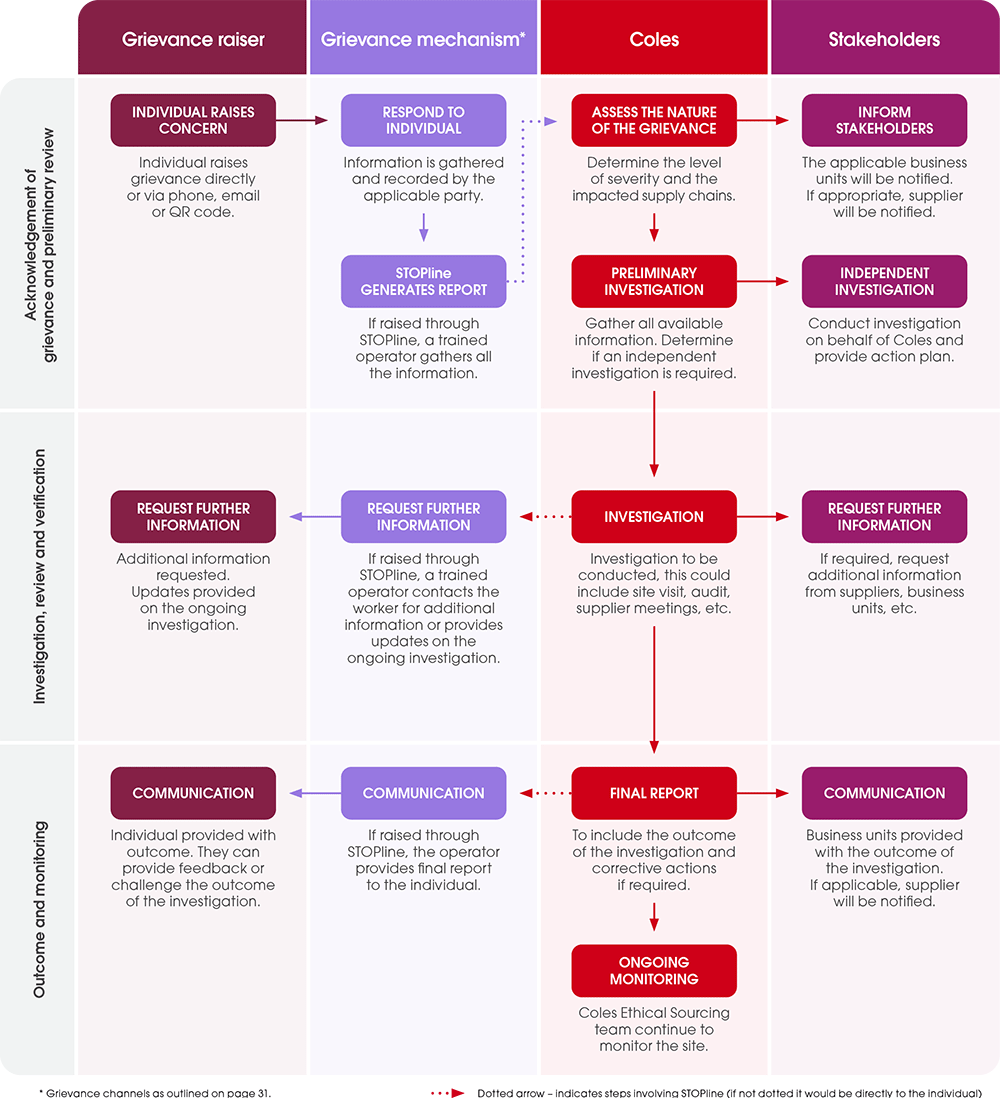
Where possible, we aim to complete a preliminary review and acknowledge the grievance raiser within 14 days. Coles endeavours to conduct the investigation without delay and, where appropriate, share the outcome with the individual or representative that raised the concern.
All human rights supply chain grievances are managed and investigated by the Coles Ethical Sourcing Team. When necessary, an independent third-party may be engaged to support an investigation. Additionally, the General Manager and Group Ethical Sourcing Manager are updated regularly on investigations. Grievance-related matters are reported to the Coles’ Board quarterly, based on the severity and investigation outcomes, and all investigations are reported annually in the Modern Slavery Statement.
Using any of Coles’ grievance mechanisms channels does not prevent reporters from accessing other remediation processes. Coles supports access to state-based judicial or non-judicial mechanisms and is open to working with Australian National Contact Point where relevant.
